Best Electric Elevated Raised Garden Bed by Soil Depth
Five elevated planter boxes ranked by the one number that actually decides root health: soil depth. Plus what the word electric does and doesn't get you in this category.

By Victoria ChapmanUpdated 15 min read
On this page
- Best electric elevated raised garden bed at a glance
- How I screened the field down to five
- Does an electric elevated raised garden bed actually exist?
- Why soil depth beats bed height every time
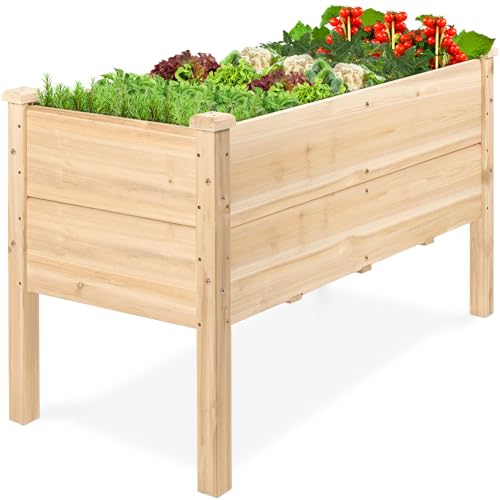
- 1. Best Choice Products 48" x 24" x 30" Raised Garden Bed — Best overall
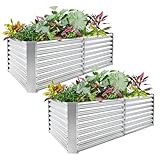
- 2. Land Guard 2 Pack 6×3×2 ft Galvanized Metal Raised Garden — Best minimal setup
- 3. Best Choice Products Raised Garden Bed 48x24x32-inch — Most versatile
- 4. GYMHILL Elevated Raised Garden Bed with Legs — Best upgrade
- 5. LEETOLLA Elevate 32" Raised Garden Bed with Wheels — Best budget pick
- How much soil will you need to buy?
- Which pick wins on a small balcony?
- The verdict
- FAQ
The best electric elevated raised garden bed for most growers is the Best Choice Products 48" x 24" x 30" bed, because its 16-inch soil depth is the deepest published column in this group and it stands 30 inches off the ground. If you'd rather roll the bed toward the sun, the Best Choice Products 48x24x32-inch mobile planter takes over, since it rides on lockable wheels at a 32-inch working height.
Depth is the number that splits this field. Not height, not footprint. A 16-inch soil column grows carrots; a shallow tray grows lettuce and gives up. Two of these five publish real soil figures, and that gap tells you most of what you need.
Best electric elevated raised garden bed at a glance
| Pick | Soil depth / volume | Height | Price |
|---|---|---|---|
| 16 in depth | 30 in | Check Price | |
Best minimal setup Land Guard 2 Pack 6×3×2 ft Galvanized Metal Raised Garden |
249 gal claim, 24 in deep | 24 in | Check Price |
Most versatile Best Choice Products Raised Garden Bed 48x24x32-inch |
100 lb capacity claim | 32 in | Check Price |
Best upgrade GYMHILL Elevated Raised Garden Bed with Legs |
12 gal claim | 33.66 in | Check Price |
Best budget pick LEETOLLA Elevate 32" Raised Garden Bed with Wheels |
Not published | 37.4 in overall | Check Price |


How I screened the field down to five
I started with the raised beds category on Amazon and compared published specifications side by side, ignoring marketing language entirely. Three data points did the sorting: soil depth or volume, overall footprint, and stated working height. Everything else is comfort.
What got cut:
- Beds under roughly 12 inches of soil depth, which limit you to shallow-rooted greens
- Ground-level frames with no elevation at all, since the whole point here is standing height
- Listings with no dimensions published, because you can't plan a patio around a guess
That left five planters spanning three price positions, from the cheapest of the group to the two most expensive. Two are wood, two are resin or coated steel on legs, one is a pair of galvanized steel boxes.
One honest note on the screening: none of these five is powered. There is no pump, no timer, no plug. The GYMHILL listing describes a self-watering resin body with a drain plug and a water monitor, which is a reservoir system, not electronics. I ranked on soil and structure instead, because that's the data that exists.
Does an electric elevated raised garden bed actually exist?
Search for a best electric elevated raised garden bed and Amazon quietly drops the word "electric" from what it shows you. That's what happened here. Not one of these five listings publishes a motor, a pump, a timer or a power requirement, so I can't tell you any of them plugs in.
That's worth understanding rather than working around. What shoppers usually want when they type "electric" is one of three things:
- Automatic watering. In this group, the closest thing is GYMHILL's stated self-watering reservoir with a drain plug and water-level monitor. It's passive wicking, not a pump.
- Grow lights or heating. No listing here mentions either. If that's your requirement, you're shopping a different category entirely.
- An app or sensor. Nothing here publishes connectivity.
If a powered system is genuinely non-negotiable, buy a separate battery or mains drip timer and pair it with whichever bed suits your space. That approach also survives the bed itself, which is more than you can say for an integrated pump. For the rest of this guide I'm judging these five on soil, height, footprint and build, because that's what the listings actually support.
Why soil depth beats bed height every time
Here's the trick with an elevated raised garden bed: the height you read in the title is mostly leg length, and leg length grows nothing. A bed can stand 37 inches tall and hold six inches of soil.
Soil depth is the number that decides what you can plant. Carrots want 12 inches or more. Beets and radishes tolerate less but sulk. Tomatoes are greedy, both for root volume and for water buffer, and a shallow tray in July dries out by mid-afternoon.
Only two picks here publish a usable soil figure. Best Choice Products states 16 inches of depth on the 48" x 24" x 30" bed. Land Guard states 249 gallons across a 6×3×2 ft box, with 24 inches of depth. Those two are your root-crop options.
The rest publish something less direct. GYMHILL claims a 12-gallon load capacity. The mobile Best Choice bed claims 100 lbs. LEETOLLA publishes overall dimensions of 31.6 x 14.6 x 37.4 in and nothing about soil volume at all. That silence is information: a 14.6-inch-wide bed on legs is a herb-and-salad planter, not a tomato patch.
Rule of thumb: if the listing won't tell you soil depth, assume it's shallow and plan accordingly.
1. Best Choice Products 48" x 24" x 30" Raised Garden Bed — Best overall
A 16-inch soil column at 30 inches of working height, which is the combination nothing else here matches.
Best for: growing carrots, beets and other root crops at standing height Skip it if: you need to move the bed to chase sunlight
This is the only pick in the group that publishes soil depth as a headline number, and 16 inches is generous for an elevated box. That single figure changes what you can plant. Root vegetables need a deep column, and Best Choice Products builds the case around exactly that, naming carrots, beets and radishes.
Overall dimensions are 30 x 48 x 24 in, so the planting area runs 48 inches long and 24 inches wide. At 33 lb empty, it's mid-weight for this set: heavier than the GYMHILL resin planter, lighter than the Land Guard steel pair. Best Choice Products says the body is solid fir with reinforced corner posts, and describes built-in drainage to keep the soil breathable.
The compromise is mobility. There are no wheels, and a 48-inch box holding 16 inches of wet soil is a two-person lift at best. Its stablemate, the 48x24x32-inch mobile version, gives you locking casters but stops publishing depth. You're choosing between the deepest soil here and the ability to reposition, and this one is the depth answer. It also sits in the most expensive price position of the five.
Pros:
- Deepest published soil depth in this group at 16 in
- 48 x 24 in planting footprint, largest of the wood beds
- Fir wood with reinforced corner posts per the listing
- Built-in drainage claimed to keep soil breathable
- 30 in height suits standing work
Cons:
- No wheels, so it stays where you build it
- Sits in the most expensive price position here
- Only one seller lists it
- Wood needs seasonal care that steel and resin don't
2. Land Guard 2 Pack 6×3×2 ft Galvanized Metal Raised Garden — Best minimal setup
Two 6-by-3-foot steel boxes with a claimed 249 gallons of planting volume, at the second-cheapest position in the set.

Best for: a yard where two large beds can stay put Skip it if: you're planting on a deck or balcony
This is the volume play. Land Guard ships two beds per order, each 6×3×2 ft, and states 36 cubic feet or 249 gallons of planting volume per box. At 24 inches deep, that's the tallest soil column of anything here, and the open bottomless base means roots keep going into the ground below.
Total shipping weight is 48 lb for the pair, which is light for coated steel. The listing describes upgraded coated steel plate with anti-rust and corrosion resistance, and promises assembly in a short time with included instructions. Two beds at once also means you can separate crops rather than crowding one box.
The honest catch is that this isn't elevated in the same sense as the others. Overall dimensions are 24 x 72 x 36 in and there are no legs, so soil sits at ground level and you'll still bend to weed. The bottomless design also rules out hard surfaces: on a deck or balcony, drainage has nowhere to go. Read it as a large-volume garden bed that happens to be tall, not as a standing-height planter.
Pros:
- 249 gal claimed volume per box, largest here
- 24 in soil depth, deepest column in the set
- Two beds included, only multi-pack in this group
- Coated galvanized steel claimed rust-resistant
- Second-cheapest price position of the five
Cons:
- No legs, so you still bend to reach the soil
- Bottomless base unsuitable for decks or balconies
- Needs a large flat outdoor footprint
- Requires far more soil than any other pick
3. Best Choice Products Raised Garden Bed 48x24x32-inch — Most versatile
Lockable wheels, a storage shelf and a protective liner on a 32-inch frame, which makes it the easiest bed here to reposition.

Best for: patios where sun shifts across the day Skip it if: you want the deepest soil column here
Sunlight on a patio moves. This is the pick that moves with it. Best Choice Products fits a set of locking wheels so you can roll the planter between sun and shade, and at 32 inches tall it's two inches higher than the brand's fixed version, which matters if bending is the problem you're solving.
Overall dimensions are 48 x 23.3 x 32 in, so you keep the same 48-inch length as the top pick. Empty weight is 33.8 lb, the heaviest single unit here. The listing adds two things nothing else in the group offers together: a protective liner that separates wood from soil, and a built-in storage shelf underneath for tools. Four drainage holes are stated, and the stated weight capacity is 100 lbs.
That 100 lb figure is the limit to watch. Wet soil is heavy, and 100 lbs won't fill 16 inches of depth across a 48-inch box, which is why this bed is shallower than its fixed sibling even though it stands taller. Soil depth isn't published at all. You're trading planting volume for the ability to chase light, and for many patio growers that's the right trade.
Pros:
- Lockable wheels, easiest bed here to reposition
- 32 in height, second-tallest working surface
- Protective liner included per the listing
- Built-in lower storage shelf for tools
- Four drainage holes stated
Cons:
- No published soil depth, unlike the fixed version
- Stated 100 lb capacity caps how much soil you can add
- Most expensive price position alongside the top pick
- Only one seller lists it
4. GYMHILL Elevated Raised Garden Bed with Legs — Best upgrade
The tallest legged planter here at 33.66 inches, with a self-watering resin body and the narrowest footprint of the group.

Best for: narrow balcony rails and herb-and-greens growing Skip it if: you want to grow full-size tomatoes
If space is the constraint, start here. At 43.31 x 17.72 x 33.66 in, this is the narrowest planter in the group by nearly six inches, and it's the tallest of the legged designs. Resin construction keeps it to 23.4 lb empty, the lightest unit here, which matters when you're carrying it up stairs to a balcony.
GYMHILL describes a self-watering system with a drain plug and a water-level monitor. That reservoir setup is the closest thing in this roundup to hands-off watering, and on a hot balcony it's the difference between checking soil twice a day and checking it twice a week. A locking-wheel set is stated, along with a storage shelf underneath and load capacity up to 12 gallons.
Twelve gallons is the number that sets expectations. Spread across a 43-inch box, that's a shallow soil column: fine for basil, lettuce, chard and flowers, thin for a determinate tomato that wants root room and water buffer. It sits mid-range for price in this set, so you're paying for the reservoir and the compact body rather than for planting volume. The 17.7-inch width also means one row, not two.
Pros:
- Tallest legged bed here at 33.66 in
- Lightest unit in the group at 23.4 lb
- Self-watering reservoir with drain plug per listing
- Only 17.72 in wide, best fit for narrow spaces
- Locking wheels and storage shelf stated
Cons:
- Claimed 12 gal capacity is the smallest volume here
- 17.72 in width limits you to a single planting row
- No published soil depth figure
- Resin won't suit gardeners who want wood or steel
5. LEETOLLA Elevate 32" Raised Garden Bed with Wheels — Best budget pick
The cheapest way into a standing-height planter, and the one buyers choose most often in this group alongside the Land Guard pair.

Best for: a first raised bed on a tight footprint Skip it if: you want published soil volume before you buy
This is the entry point. LEETOLLA prices it cheapest of the five and it sells faster than three of the other picks here, which tells you the combination of standing height and a small footprint finds buyers. Overall dimensions are 31.6 x 14.6 x 37.4 in, making it the shortest bed in the set at just over 31 inches long.
The mobility approach is different from the caster-based beds. LEETOLLA describes two all-terrain wheels plus an ergonomic handle, so you tilt and roll it like a wheelbarrow rather than pushing a cart. The listing claims that setup handles a 200+ lb planted bed. Five drainage holes and dual cross-channels are stated to prevent waterlogging in heavy rain, and a detachable bottom shelf stores tools. Two sellers list it, the only pick here with more than one.
What's missing is the data. No weight is published, no soil depth, no volume. Colour is listed as black and that's most of what the specifications tell you. The 14.6-inch width also makes this the narrowest planting area in the group. The listing itself warns to repair coating scratches promptly to reduce corrosion, which is a maintenance job the resin and wood picks don't ask of you.
Pros:
- Cheapest of the five picks
- Two all-terrain wheels plus handle for rolling
- Five drainage holes and dual cross-channels stated
- Smallest 31.6 in footprint, easiest to place
- Two sellers list it, most in this group
Cons:
- No published soil depth, volume or weight
- 14.6 in width is the narrowest planting area here
- Coating scratches need prompt repair per the listing
- Tilt-and-roll design is less stable than locking casters
How much soil will you need to buy?
This is the cost nobody plans for. The bed arrives, you fill it, and you discover a 48-inch box swallows more bagged mix than you expected. Published volume figures make the difference between one trip and three.
Land Guard is explicit: 36 cubic feet, or 249 gallons, per box. Two boxes doubles that. Best Choice Products publishes 16 inches of depth across a 48 x 24 in area on the top pick, which is a substantial fill. GYMHILL states up to 12 gallons. LEETOLLA and the mobile Best Choice bed publish neither depth nor volume, so plan on measuring the interior once it's assembled.
A few practical points before you order mix:
- Deeper beds hold moisture longer, so they need watering less often
- Legged planters drain fast and dry faster than ground-level boxes
- A bottomless steel bed lets you fill the lower portion with cheaper bulk material
- Wet soil roughly doubles in weight, which is why stated capacity limits matter
If budget for soil is tight, the legged picks win. If you want the deepest planting and don't mind the fill cost, the top two are your beds.
Which pick wins on a small balcony?
Footprint decides it, and the numbers separate these five cleanly. GYMHILL is 17.72 in wide, LEETOLLA is 14.6 in wide, and both Best Choice beds run about 24 in. Land Guard needs 24 x 72 in of flat ground per box and can't sit on a deck at all, because the base is open.
For a balcony, I'd start with GYMHILL. It's the lightest at 23.4 lb, the narrowest legged bed with a real planting width, and the stated self-watering reservoir suits a spot you can't reach with a hose. LEETOLLA is the cheaper alternative if 14.6 inches of width is enough for herbs.
For a patio or deck with room to spare, the mobile Best Choice bed is the better electric elevated raised garden bed substitute, since the locking wheels let you follow the light and the storage shelf keeps tools off the ground.
The cutoff is 20 inches of width. Below it, you're growing herbs, greens and flowers in a single row. Above it, two rows and larger plants become realistic.
The verdict
The Best Choice Products 48" x 24" x 30" bed is the best electric elevated raised garden bed pick for most people, and it wins on one number: 16 inches of published soil depth at a 30-inch working height. Nothing else here combines a real root-crop soil column with a standing-height frame and a 48 x 24 in planting area. If you plan to grow carrots, beets or anything with a taproot, this is the default.
Two conditions flip that. First, if the bed has to move, the Best Choice Products 48x24x32-inch mobile version takes over. Lockable wheels, a 32-inch height, a liner and a storage shelf give you flexibility the fixed model can't, and you accept a shallower fill within its stated 100 lb capacity to get it.
Second, if you have open ground and want maximum planting volume for the least money, the Land Guard pair is the answer. Two 6×3×2 ft boxes with a claimed 249 gallons each and 24 inches of depth beat everything here on sheer soil, at the second-cheapest price position, provided you accept that you'll be bending to reach it.
GYMHILL's runner-up advantage is specific: at 17.72 in wide and 23.4 lb, it fits balconies the others don't, and its stated reservoir handles watering you can't do daily.
FAQ
Is an electric elevated raised garden bed worth paying more for?
An electric elevated raised garden bed isn't something any listing in this group actually offers, so there's no premium to pay. None of these five publishes a pump, timer or power connection. What you can buy is a passive reservoir, like GYMHILL's stated self-watering resin body. Pair any bed with a separate drip timer if automation matters to you.
What soil depth do I need for tomatoes and carrots?
Soil depth for tomatoes and carrots runs deeper than most elevated beds provide. Carrots want 12 inches or more of loose column so the root can run straight. Tomatoes need volume for water buffer as much as roots. The Best Choice Products top pick publishes 16 inches; Land Guard publishes 24 inches. Those are the two picks here I'd trust with either crop.
Best Choice Products fixed or mobile: which should I buy?
Best Choice Products fixed or mobile comes down to whether the bed stays put. The fixed 30-inch model publishes 16 inches of soil depth and a 48 x 24 in area, so it grows more. The 32-inch mobile version adds lockable wheels, a liner and a storage shelf, but states a 100 lb capacity and no depth figure. Depth versus mobility, plainly.
Which is the best value elevated raised garden bed here?
The best value elevated raised garden bed depends on what you count. LEETOLLA is cheapest of the five and gives you a 37.4-inch standing frame with wheels. Land Guard costs a little more and delivers two boxes with a claimed 249 gallons each, which is far more planting volume per unit spent. For volume, Land Guard. For lowest entry cost, LEETOLLA.
What mistake do first-time raised bed buyers make?
The mistake first-time raised bed buyers make is reading overall height as soil depth. A 37.4-inch bed can hold six inches of mix, because most of that number is leg. Check published depth or gallon capacity before you order, and if the listing doesn't state either, assume shallow. That single check would redirect half the purchases in this category.
Pick the bed around what you intend to plant, not around how tall it looks in the photo. If root vegetables are the goal, order the Best Choice Products 48" x 24" x 30" bed and buy enough mix to fill all 16 inches on day one, because topping up a settled bed later never works as well. Measure your space first, note the width, and compare it against the 14.6-inch, 17.72-inch and 24-inch footprints here. Then plan watering separately from the bed itself, with a timer if you need one, since no planter in this group will do it for you.