Best Raised Garden Beds by Depth and Load Rating
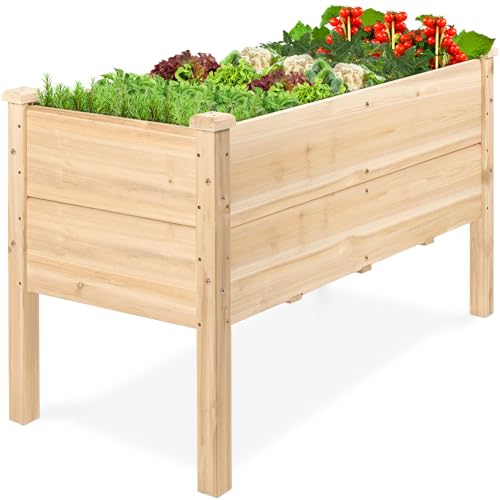
Five legged and bottomless planters compared on soil depth, load rating and frame material, with a plain answer about what a slope actually demands from the legs.

By Victoria ChapmanUpdated 16 min read
On this page
- Best elevated raised garden bed for steep hills at a glance
- Why a slope is a leg problem, not a bed problem
- How I screened this shortlist down to five
- 1. Best Choice Products 48" x 24" x 30" Raised Garden Bed — Best overall
- 2. Yardbliss Large Galvanized Raised Garden Bed — Best upgrade
- 3. Best Choice Products 72x24x30in Raised Garden Bed — Best premium
- 4. Tegarbed Galvanized Raised Garden Bed, 2-Pack — Best budget pick
- 5. Chuangshuo Guard 32" Tall Raised Garden Bed, 2-Pack — Best minimal setup
- How deep does the soil really need to be?
- Wood or galvanized steel: which frame holds up?
- What more money buys across these five beds
- The verdict
- FAQ
The best elevated raised garden bed for steep hills is the Best Choice Products 48" x 24" x 30" bed, because 16 inches of soil depth on a 30-inch-tall fir frame gives you real root room at working height. If you plan to fill a legged bed with heavy wet soil, the Yardbliss galvanized bed and its stated 1200 lb capacity is the safer frame. The figure that splits this field is depth: it runs from 12 inches to 16 inches across these five, and that gap decides what you can actually grow. Load rating is the second split, from 300 lb to 1200 lb. Everything else is trim.
Best elevated raised garden bed for steep hills at a glance
| Pick | Soil depth | Load rating | Price |
|---|---|---|---|
| 16 in | Not stated | Check Price | |
Best upgrade Yardbliss Large Galvanized Raised Garden Bed |
30 in tall frame | 1200 lb claim | Check Price |
| 8.4 cu ft claim | 300 lb claim | Check Price | |
Best budget pick Tegarbed Galvanized Raised Garden Bed, 2-Pack |
12 in | Bottomless, ground-set | Check Price |
Best minimal setup Chuangshuo Guard 32" Tall Raised Garden Bed, 2-Pack |
31.6 in tall frame | 400 lb claim | Check Price |


Why a slope is a leg problem, not a bed problem
Let's be straight about something. None of these five listings claims to solve a slope. There is no adjustable leg, no telescoping foot, no levelling hardware described in any of the product data I worked from. Anyone selling you a legged planter as slope-ready is filling in a blank the manufacturer left empty.
So here's the honest framing. On sloped ground, the bed is not what fails. The four legs are, because three of them carry the load and the fourth hangs in air. You solve that with shims, a poured pad, a levelled terrace cut into the hill, or gravel packed under the low feet. That's site work, not shopping.
What you can shop for is a frame stiff enough to survive being loaded while slightly out of level. Two things point at that:
- Stated load capacity, which runs from 300 lb to 1200 lb across this set
- Frame material and post thickness, where the metal beds publish gauge figures and the wood beds don't
Read the rest of this guide with that split in mind. I'm ranking these on depth, capacity and build, because those are the fields the listings actually fill in.
How I screened this shortlist down to five
I started from the raised beds subcategory and pulled every legged or elevated planter with enough published specification data to compare. Then I cut hard.
- No published dimensions, no entry. Every pick here states length, width and height in inches.
- No frame detail, no entry. Each listing names its material: solid fir, Chinese fir, or galvanized steel with a stated thickness.
- Duplicate form factors were merged. Where two listings offered the same footprint at the same depth, I kept the one with more published detail.
That left five, and they sort neatly. Two are fir wood planter boxes from Best Choice Products at 48 and 72 inches long. Two are galvanized steel, one legged and one bottomless. One is a wheeled grey steel unit sold as a pair.
The set is small on purpose. There is no point listing ten beds that differ only in colour. These five differ in the ways that change your planting: 12-inch versus 16-inch soil depth, 300 lb versus 1200 lb stated capacity, legs versus an open bottom, fixed feet versus wheels. That's a real spread of decisions in five products.
One thing worth noting on availability of choice: the Tegarbed pair is stocked by three sellers, the Yardbliss by two, and the other three are each listed by a single seller.
1. Best Choice Products 48" x 24" x 30" Raised Garden Bed — Best overall
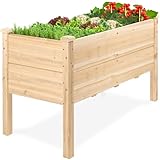
Sixteen inches of soil depth on a 30-inch stand is the most useful combination in this set, and it's the reason this one leads.
Best for: growing carrots, beets and other root crops in a legged bed Skip it if: you need a long bed to split between two crops
Depth is the number that decides what you can grow, and this bed has the deepest published soil figure here at 16 inches. That's four more inches than the Tegarbed pair. Four inches sounds small until you're pulling a carrot that hit a hard bottom and forked sideways. Best Choice Products says the extra depth supports root vegetables like carrots, beets and radishes, and the depth figure backs the claim.
The footprint is 48 by 24 inches with an overall height of 30 inches, and the whole unit weighs 33 lb. That's the middle of this group by weight. The listing describes solid fir with reinforced corner posts and thick panels, plus built-in drainage. Fir is the same family of wood as the 72-inch sibling below, so you get the same weathering behaviour in a shorter, more manageable frame.
Where it gives ground: there's no published load capacity. The Yardbliss states 1200 lb and the 72-inch fir bed states 300 lb, so this one sits in a blank between them. It also sells more slowly than the 72-inch version, and only one seller lists it.
Pros:
- Deepest published soil depth here at 16 in
- 30 in working height, no kneeling
- Solid fir with reinforced corner posts
- Compact 48 x 24 in footprint fits a terrace
- Built-in drainage described in the listing
Cons:
- No stated weight capacity anywhere in the listing
- Only one seller stocks it
- No divider, so it's one growing zone
- Sits in the higher price group despite the short frame
2. Yardbliss Large Galvanized Raised Garden Bed — Best upgrade
A stated 1200 lb capacity on 1.4 mm vertical posts is the stiffest published frame in this comparison.

Best for: anyone loading a legged bed to the brim with wet soil Skip it if: you want wood that blends into a deck
Wet soil is heavier than most people expect, and a legged bed carries all of it on four points. Yardbliss publishes the specific numbers behind its frame: 1.2 mm galvanized square tubes at the base and 1.4 mm thickened vertical posts, with a stated 1200 lb load capacity. That figure is four times the 300 lb quoted on the 72-inch fir bed. Whether the frame delivers it is the manufacturer's claim, but no other listing here even attempts a number that size.
The dimensions are 48 by 24 by 30 inches, matching my top pick's footprint and height almost exactly, in black galvanized steel rather than natural fir. It's the lightest of the two legged 48-inch beds at 28 lb. The listing describes protective pads on every corner and smooth edges, plus built-in drainage holes.
Assembly is where it costs you. Yardbliss says the pre-drilled holes and full screw set make it straightforward but concedes it may take some time. That's an unusually candid line, and worth believing. Soil depth also isn't published separately from the 30-inch overall height, so you can't compare it directly against the 16-inch figure above.
Pros:
- Highest stated load capacity here at 1200 lb
- Published post thickness: 1.2 mm base, 1.4 mm uprights
- Galvanized steel, no wood rot to plan around
- Corner pads protect decking
- Lightest of the 48 in legged beds at 28 lb
Cons:
- Soil depth not published separately
- The listing itself warns assembly takes time
- Black metal looks industrial next to fir
- Only two sellers list it
3. Best Choice Products 72x24x30in Raised Garden Bed — Best premium
Six feet of fir with a divider panel and six legs, for gardeners who want two separated crops in one run.

Best for: gardeners who want two separated growing zones in one frame Skip it if: your usable flat space is under six feet long
This is the biggest bed here, and the divider panel is the reason to want it. Best Choice Products quotes 8.4 cubic feet of planting space across a 72 by 24 by 30-inch frame, split into two sections. That means tomatoes on one side and herbs on the other without roots competing, in a single structure you assemble once.
The six-leg design matters more than it looks. A 72-inch span on four legs sags in the middle once it's loaded; six spreads the load across three points down each long side. The listing states a 300 lb weight capacity and six drainage holes, and describes Chinese fir chosen to resist warping and sagging. At 37.5 lb, it's the heaviest single unit in this comparison.
The problem on a hill is obvious. Six feet of level ground is much harder to find on a slope than four, and every extra leg is another foot to shim. This one sells faster than any other legged bed here, which tells you flat-yard owners like it. It's also the most expensive pick in the set, and its 300 lb rating is the lowest published capacity among the legged beds.
Pros:
- Divider panel creates two independent growing zones
- 8.4 cu ft claimed planting volume, the largest here
- Six legs spread load across a 72 in span
- Six drainage holes stated in the listing
- Sells faster than the other legged wood bed
Cons:
- 300 lb stated capacity is the lowest of the legged picks
- Needs six feet of level ground, hard to find on a slope
- Heaviest single unit at 37.5 lb
- The most expensive pick in this set
- Only one seller lists it
4. Tegarbed Galvanized Raised Garden Bed, 2-Pack — Best budget pick
Two bottomless 12-inch steel beds that sit on the ground, which sidesteps the whole levelling problem.

Best for: planting straight onto graded ground or a levelled terrace Skip it if: you need a bed with legs at working height
Here's the trick with slopes: a bottomless bed set into a cut terrace is far more stable than any legged frame, because it bears on its whole perimeter instead of four small feet. This Tegarbed pair is the only ground-set option in this comparison, and it's the cheapest of the five. You get two 4 by 2 by 1-foot oval beds, 17.2 lb combined, in corrugated silver steel that Tegarbed lists as averaging 1 mm thickness.
The open bottom does two jobs. Water drains into the ground below rather than pooling, and roots reach native soil beneath the 12-inch fill. Tegarbed says setup takes about 20 minutes with no tools, connecting panels with the included fasteners. Two units also let you stagger them at different heights down a slope, which one long bed cannot do.
The trade-off is real. Twelve inches is the shallowest depth in this set, four less than my top pick, and it's a bad match for long carrots. There's no working height at all, so kneeling comes back. And a bottomless bed needs ground you can plant into, which rules out a deck or a paved patio. This is also the fastest-selling item here by a wide margin.
Pros:
- Cheapest of the five and you get two beds
- Bottomless design drains into native soil
- Sits on its full perimeter, no legs to shim
- Tool-free assembly in about 20 minutes
- Three sellers stock it, the most here
Cons:
- 12 in is the shallowest depth in this set
- No elevation, so you're kneeling to work
- Useless on decking, paving or a balcony
- Corrugated panel steel is thinner than the legged Yardbliss posts
5. Chuangshuo Guard 32" Tall Raised Garden Bed, 2-Pack — Best minimal setup
Wheels and a handlebar on a 31.6-inch frame, sold as a pair, for gardeners who move their planters rather than settle them.

Best for: moving a planter around a patio to chase sun Skip it if: the ground under it is anything but flat and hard
This is the tallest frame in the group at 31.6 inches, and the only one with wheels. Chuangshuo Guard describes two plus-size universal wheels plus an ergonomic handlebar for shifting 200 lb of soil, and a lower shelf across the 37-inch width for tools and fertiliser. You get two units, at the second-cheapest position in this set. The frame is galvanized steel with an anti-rust charcoal grey coating, and the brand claims a dual-layer drainage arrangement of five holes plus two cross lines.
The footprint is narrow: 37.4 by 14.6 inches. Chuangshuo Guard pitches that at tight balcony corners, and a 14.6-inch width does slot into places a 24-inch bed won't. Two narrow units also give you more placement freedom than one wide one.
Now the honest part, and it's important on a hill. Wheels are the worst possible foot on sloped ground. They roll, they sink into soft soil, and they concentrate load on two contact points. Fix or chock them if the ground isn't dead level. Stated capacity is 400 lb, above the 72-inch fir bed but a third of the Yardbliss figure. Soil depth also isn't published, and the width is the narrowest here by nearly ten inches.
Pros:
- Tallest frame in the set at 31.6 in
- Wheels and handlebar for repositioning
- Narrow 14.6 in width fits tight corners
- Lower shelf holds tools and feed
- Two units at the second-cheapest position
Cons:
- Wheels are a liability on any slope or soft ground
- No published soil depth figure
- 400 lb capacity is a third of the Yardbliss claim
- Narrowest growing width here by a wide margin
- Only one seller lists it
How deep does the soil really need to be?
Depth is the single most useful figure on a raised bed listing, and it's the one people skim past on the way to length and width. Two of these five publish it plainly: 16 inches on my top pick, 12 inches on the Tegarbed pair.
What that buys you, in rough terms:
- Around 6 inches: lettuce, spinach, radishes, most herbs
- Around 12 inches: peppers, strawberries, bush beans, shorter carrots
- Around 16 inches: full-length carrots, beets, parsnips, determinate tomatoes
So the 12-inch Tegarbed beds cover a lot of ground, and Tegarbed names lettuce, peppers, strawberries and carrots specifically. The 16-inch Best Choice Products bed is what you want if root crops are the point rather than a bonus.
The two beds that publish only an overall height are harder to plan against. A 30-inch or 31.6-inch total height tells you the working surface, not the soil basin. That's a genuine gap in the Yardbliss and Chuangshuo Guard listings, and I'd measure the basin myself before committing to root crops in either.
One practical note for the best elevated raised garden bed for steep hills question: deeper soil means more weight per square foot, which loads the legs harder. Depth and capacity are linked, and you should read both figures together.
Wood or galvanized steel: which frame holds up?
This set splits two against three. Two fir wood planter boxes, three galvanized steel builds. It's the clearest fork in the road here.
Wood, as represented by the two Best Choice Products beds:
- Fir with reinforced corner posts and thick panels on the 48-inch bed
- Chinese fir described as resisting warps and sagging on the 72-inch
- Heavier units, at 33 lb and 37.5 lb
- Blends into a deck or fence visually
- Neither publishes a panel thickness figure
Steel, as represented by Yardbliss, Tegarbed and Chuangshuo Guard:
- Published thickness figures: 1.4 mm posts on Yardbliss, roughly 1 mm panels on Tegarbed
- Lighter frames, from 17.2 lb for the Tegarbed pair to 28 lb for the Yardbliss
- Anti-rust coatings named on the Yardbliss and Chuangshuo Guard listings
- Every stated load rating over 400 lb in this set is on a steel frame
My read: if the frame will be loaded near its limit and left through wet winters, steel with a published gauge is the more defensible buy, and the Yardbliss 1200 lb claim sits well clear of everything else. If it's going on a deck where it has to look like it belongs, the fir beds win on appearance and lose nothing you can measure.
What more money buys across these five beds
Spend the least here and you get the Tegarbed pair: two bottomless 12-inch steel beds, 17.2 lb, three sellers, tool-free setup. What you don't get is legs. Step up slightly to the Chuangshuo Guard pair and you're buying height, 31.6 inches of it, plus wheels, a shelf and a 400 lb rating.
The middle of this set is the Yardbliss, and it's the best value jump in the group. That step buys you the 1200 lb capacity claim and published post thicknesses on a 48 by 24 by 30-inch frame. Nothing cheaper here publishes a number close to it.
The top two positions are both fir. The 48-inch Best Choice Products bed buys depth: 16 inches, the most here. The 72-inch version buys length and a divider, at 8.4 cubic feet of claimed volume across six legs.
So the pattern is clean. Cheap buys you ground-level growing area. Mid buys you frame stiffness. Premium buys you either soil depth or planting volume, and you pick which one your crops need. Nothing in this set charges you for a feature you can't see in the specifications, which is more than you can say for most of this category.
The verdict
Three tiers, three clear answers.
At the entry end, the Tegarbed 2-pack is the pick, and on a hill it may genuinely be the smartest thing here. Two bottomless 12-inch beds bear on their full perimeter instead of four feet, so a levelled terrace or a graded strip holds them without shimming. You lose the working height entirely, and 12 inches limits long root crops.
In the middle sits the Yardbliss galvanized bed, and it's the one I'd point most slope owners toward if they insist on legs. A stated 1200 lb capacity on 1.4 mm vertical posts is the only figure in this set that suggests a frame with real margin, and margin is exactly what you want when one leg is doing more work than the others.
At the premium end, the Best Choice Products 48" x 24" x 30" bed takes the overall win on the one figure nobody else beats: 16 inches of soil depth at a 30-inch working height, in solid fir with reinforced corners. If you want six feet and a divider instead, the 72-inch sibling gives you 8.4 cubic feet on six legs, at the highest price position here and the lowest stated capacity of the legged beds.
The cutoff between the top two is depth versus length. Root crops, take the 48-inch. Two crops side by side and six feet of level ground, take the 72-inch.
FAQ
Which raised bed here is the best value for the money?
The best value for the money is the Tegarbed 2-pack. It's the cheapest option in this comparison and it delivers two separate 4 by 2 by 1-foot beds, a combined 17.2 lb of galvanized steel, and setup in roughly 20 minutes without tools. Three sellers stock it, the most of any pick here.
Is an elevated raised garden bed worth it on a slope?
An elevated raised garden bed is worth it on a slope only after you deal with the ground. None of these five listings describes adjustable legs or levelling hardware, so you'll be shimming feet, packing gravel, or cutting a terrace. Do that work first. Then a 30-inch bed like the Best Choice Products 48-inch model saves your knees for years.
How much soil depth do carrots and beets actually need?
Soil depth for carrots and beets should be around 16 inches for full-length varieties. That's why the Best Choice Products 48" x 24" x 30" bed leads this guide: its 16-inch depth is the deepest published figure in the set. The 12-inch Tegarbed beds handle shorter carrots, lettuce, peppers and strawberries comfortably.
Yardbliss or Best Choice Products: which should I pick?
Yardbliss or Best Choice Products comes down to capacity against depth. Yardbliss states 1200 lb on 1.4 mm galvanized posts, four times the 300 lb quoted on the 72-inch fir bed, but publishes no separate soil depth. Best Choice Products publishes 16 inches of depth but no load rating. Heavy wet fill, go Yardbliss. Root crops, go fir.
What mistake do buyers make with a raised garden bed for steep hills?
The mistake with a raised garden bed for steep hills is treating wheels as convenience. On sloped or soft ground, wheels roll, sink and concentrate the whole load on two points. The Chuangshuo Guard pair is excellent on a flat patio for exactly that mobility, but chock or fix those wheels the moment the surface isn't level.
Start with a tape measure and a level, not a shopping cart. Find out how long a genuinely flat strip you can create, because that number rules half this list in or out before depth or capacity matters. Four feet of level ground puts the Best Choice Products 48" x 24" x 30" bed in play, and its 16-inch soil depth is the one specification in this group that expands what you can grow rather than just where you can put it. Six feet opens up the divided 72-inch bed. No flat ground at all, and the bottomless Tegarbed pair set into a cut terrace is the honest answer.