Best Greenhouse for Raised Beds in Small Yards
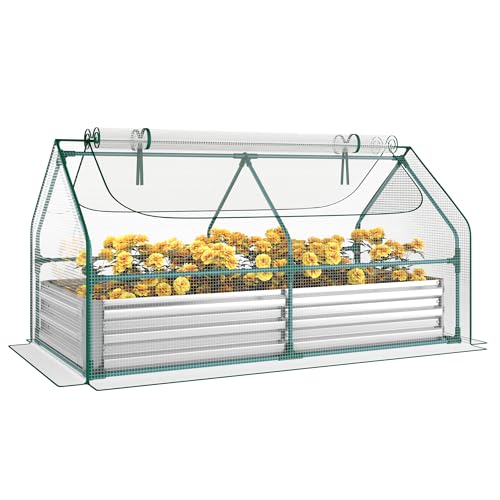
Six raised bed and cover kits compared on the one number that decides whether your tomatoes fit: interior cover height. Plus who should buy hoops instead of a full kit.

By Victoria ChapmanUpdated 18 min read
On this page
- Best greenhouse for raised beds at a glance
- How I screened these raised bed greenhouse kits
- How tall is the cover, and why does it matter most?
- 1. Miory Raised Garden Bed with PE Cover — Best overall
- 2. Ohuhu 8x4x1 FT Raised Garden Bed Outdoor with Cover — Best for families
- 3. Quictent 6x3x1ft Galvanized Raised Garden Bed with Cover — Most versatile
- 4. FuBegi Garden Hoops for Raised Beds Row Cover — Best budget pick
- 5. Best Choice Products 48 x 24 x 30 Inches Raised Garden Bed — Best premium
- 6. Garden Elements Brown Elevated Raised Garden Bed — Best upgrade
- Bed kit or hoops: which suits your existing beds?
- What the listings do not tell you about assembly
- When a different pick wins
- The verdict
- FAQ
The best greenhouse for raised beds is the Miory Raised Garden Bed with PE Cover, a 6x3x1 ft galvanized box with a zippered cover and two reinforced middle support poles in one kit. If you already own beds and just need protection over them, the FuBegi hoop set gives you 36 fiberglass rods at 17 in long for a fraction of the outlay. The number that decides this category is not bed footprint. It's the interior height under the cover, and it ranges from 8 in to 51 in across these six.
Best greenhouse for raised beds at a glance
| Pick | Bed footprint | Cover height | Price |
|---|---|---|---|
Best overall Miory Raised Garden Bed with PE Cover |
6 x 3 x 1 ft | 33.6 in overall | Check Price |
Best for families Ohuhu 8x4x1 FT Raised Garden Bed Outdoor with Cover |
8 x 4 x 1 ft | 51 in frame claim | Check Price |
Most versatile Quictent 6x3x1ft Galvanized Raised Garden Bed with Cover |
6 x 3 x 1 ft | 35.4 in overall | Check Price |
Best budget pick FuBegi Garden Hoops for Raised Beds Row Cover |
fits 3 ft or 4 ft beds | 17 in rods | Check Price |
| 48 x 24 in, 30 in tall | no cover included | Check Price | |
Best upgrade Garden Elements Brown Elevated Raised Garden Bed |
29.5 x 15 in | 8 in dome | Check Price |



How I screened these raised bed greenhouse kits
I lined up the published specifications for every kit side by side and threw out anything whose footprint or cover geometry wasn't stated. What's left splits into three genuinely different products, and that matters before you spend anything.
Three of these six are complete bed-plus-cover kits: Miory, Ohuhu and Quictent. One is a cover system with no bed at all, the FuBegi hoops. Two are raised beds where the greenhouse element is either absent or minimal: the Best Choice Products wooden stand and the Garden Elements planter with its 8 in dome.
A note on the search itself. Ask for the best greenhouse for raised beds and you get a mix of true walk-in structures, bed-mounted covers and bare hoops. Nothing here is a walk-in greenhouse you stand up inside. The tallest cover in this set is the Ohuhu at a claimed 51 in frame height, which is chest height on most adults. Treat "greenhouse" here as season extension over a bed, not a building.
What I screened for, in order:
- Stated interior or overall height. Without it you can't know what will fit.
- Frame material. Galvanized steel, fiberglass and fir wood all behave differently outdoors.
- Cover included or not. Two of the six don't include a full cover.
- Footprint against a standard bed width. 3 ft and 4 ft are the widths that matter.
Two products were kept despite being incomplete greenhouses, because a lot of buyers searching this phrase actually want a taller bed, not a taller cover.
How tall is the cover, and why does it matter most?
Footprint is what listings shout about. Height is what decides whether your crop makes it to harvest. A determinate bush tomato reaches roughly two feet before it sets fruit, and a pole bean will run past four. Under a 17 in hoop, both are out.
Here's the trick with these numbers: the height in the specifications is often the whole assembly, bed included. The Miory bed is 6x3x1 ft with an overall figure of 33.6 in, so subtract the 12 in of bed wall and the usable arch is a bit over 21 in. The Quictent measures 35.4 in overall on the same 1 ft bed, which is the taller of the two by a couple of inches. The Ohuhu is the outlier: its listing claims a greenhouse frame of 97 in x 50 in x 51 in, and that's the only pick here where a staked tomato has real room.
Match the height to the crop:
- Under 12 in: seed starting, lettuce, spinach, radish, herbs.
- 12 to 24 in: bush beans, chard, kale, brassica seedlings, strawberries.
- 24 to 40 in: determinate tomatoes, peppers, cucumbers on a short trellis.
- Above 40 in: indeterminate tomatoes, pole beans, anything you'll stake.
The second thing height buys you is airflow. A low cover in full sun bakes. Miory and Quictent both put two zippered screen windows on the cover for exactly this reason, and the Garden Elements dome uses adjustable vents instead. That's the trade-off you're making when you buy short: less headroom and less air volume, on the same square footage of soil.
1. Miory Raised Garden Bed with PE Cover — Best overall
One kit that solves the bed and the cover at the same time, at the middle of this price range rather than the top.
Best for: a first raised bed in a small yard, cover included Skip it if: you already own beds and only need a cover
The reason this wins is fit. Buy hoops separately and you're guessing at rod spacing, clip size and how the plastic anchors to your bed wall. Here the 6x3x1 ft galvanized box and the PE cover are dimensioned for each other, with an overall 12 x 69.6 x 33.6 in assembly. That leaves roughly 21 in of arch over 12 in of soil depth, which covers most of what a home grower plants in spring.
The frame is galvanized steel in silver, with two reinforced middle support poles that Miory says stop the long sides bowing outward under wet soil. That's the failure mode on cheap 6 ft beds, and it's worth checking on any bed this length. The cover carries two large zippered screen windows, dual-layer, so you get mesh for birds and solid PE for wind and rain. Miory describes it as three products in one: bed alone, cover alone, or both.
Against the Quictent, which shares the same 6x3x1 ft footprint, the Miory sits one position cheaper and includes plant labels and gloves. The Quictent's 35.4 in overall height is the taller frame. Against the Ohuhu, you're giving up 30 in of bed length and a much taller cover.
Pros:
- 6x3x1 ft bed and matched PE cover in one kit
- Two reinforced middle support poles against bowing
- Two large zippered dual-layer screen windows
- Galvanized steel frame, rust-resistant
- Plant labels and gloves included
Cons:
- Shortest arch of the three full kits at 33.6 in overall
- Only one seller lists it, so no alternate source
- No published weight figure to judge frame thickness
- No stated warranty, unlike the FuBegi hoops
2. Ohuhu 8x4x1 FT Raised Garden Bed Outdoor with Cover — Best for families
The only pick with enough headroom for staked tomatoes, and nearly double the soil area of the 6x3 kits.

Best for: growing enough vegetables to actually feed a household Skip it if: your growing space is narrower than 4 ft
Scale is the argument. An 8 x 4 ft bed gives you 32 square feet of soil against 18 for a 6 x 3, and Ohuhu states a greenhouse frame of 97 in x 50 in x 51 in. At 51 in the cover clears a caged determinate tomato with room to spare. Nothing else in this set comes close.
It's the heaviest full kit at 29.8 lb, shipping at 51.2 x 94.5 x 47.2 in, model GGH-20. Ohuhu says the PE cover uses a sloped roof so rain and snow shed rather than pooling, which is the thing that collapses flat covers in February. Inside the bed, metal support rods are claimed to prevent deformation across that 8 ft span. The greenhouse frame uses plastic connectors, which Ohuhu presents as an assembly and storage benefit: it comes apart flat when the season ends.
Those plastic connectors are also the honest worry. They're the one non-metal structural element in a kit sold on galvanized steel, and on a 51 in frame they carry real wind load. This is also the most expensive pick here, and a 4 ft width means you're reaching 24 in to the middle from either side.
Pros:
- Largest footprint here at 8 x 4 x 1 ft
- Tallest cover of the six, 51 in frame claim
- Sloped roof design sheds rain and snow
- Detachable frame stores flat off-season
- Several sellers stock it
Cons:
- Most expensive pick in this set
- Plastic frame connectors on the tallest structure
- 29.8 lb makes repositioning a two-person job
- 4 ft width is a long reach to the centre row
3. Quictent 6x3x1ft Galvanized Raised Garden Bed with Cover — Most versatile
The clear cover and 18 cu ft stated soil capacity make this the easiest kit to run half-covered through shoulder season.

Best for: gardeners who want the cover on and off through the season Skip it if: you need the tallest cover here
Same 6 x 3 x 1 ft footprint as the Miory, two inches taller overall at 35.4 in, and 24.9 lb on the scale. Model GB55-631C. Quictent puts a figure on soil volume that the others don't: about 18 cu ft, which is the number you actually need when you're pricing bags of compost. Four 1.5 cu ft bags won't do it. Twelve will.
The colour spec here is clear, not silver or green, which changes how you use it. A transparent cover lets you see leaf colour and pest damage without unzipping, so mid-season checks take seconds. Two zippered screen windows handle ventilation and keep birds off ripening fruit. Quictent describes the kit as three products in one and calls the greenhouse dismountable, so the cover comes off cleanly in high summer and goes back on for autumn.
Frame construction mirrors the Miory: extra-thick galvanized metal with two stronger middle poles, which Quictent contrasts against thin aluminium flat bar that bends. Against the Miory you gain two inches of height and a stated soil figure. You pay one position more, and you don't get the labels and gloves.
Pros:
- 35.4 in overall, taller than the Miory
- Stated 18 cu ft soil capacity for planning
- Clear cover for at-a-glance plant checks
- Two zippered screen windows for airflow
- Two reinforced middle poles against bending
Cons:
- Costs more than the near-identical Miory kit
- Clear PE shows algae and dirt faster than opaque
- Well short of the Ohuhu's 51 in headroom
- No stated warranty on frame or cover
4. FuBegi Garden Hoops for Raised Beds Row Cover — Best budget pick
Thirty-six fiberglass hoops and 24 clips for the cheapest entry into covered growing, provided you already have beds and bring your own netting.

Best for: covering beds you already built, 3 ft or 4 ft wide Skip it if: you want a cover in the box
Read the first line of the listing before anything else: there is no netting included. FuBegi says so plainly. What you get is 36 fiberglass rods, 17 in in length, plus 24 clips, model GH-36, the whole set weighing 2.31 lb. The rods are sized for beds 3 ft and 4 ft wide, which is exactly the range the Miory, Quictent and Ohuhu beds sit in.
This is the cheapest pick of the six and it's the one buyers choose most often here. The logic is easy to follow. If you already have two or three beds, one order of hoops covers all of them, and you buy whatever cover material the season calls for: insect mesh in June, frost cloth in October, clear plastic in March. Fiberglass doesn't rust, and FuBegi says these hoops came through high wind, driving rain and heat. It's also the only pick in this set with a published warranty, one year against manufacturer defects.
The trade-offs are real. At 17 in the arch is the lowest here, so tall crops are out. Sourcing and cutting cover material is your job, and the clips have to grip material you haven't bought yet. There's no frame stiffness beyond what the rods provide.
Pros:
- Cheapest pick in this set
- 36 hoops and 24 clips covers multiple beds
- Rust-free fiberglass, 2.31 lb total
- One-year warranty against defects, the only one here
- Sized for both 3 ft and 4 ft beds
Cons:
- No netting or cover material included
- 17 in arch is the lowest of the six
- You supply and cut the cover yourself
- No bed, so useless on its own
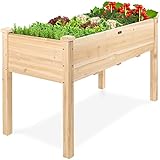
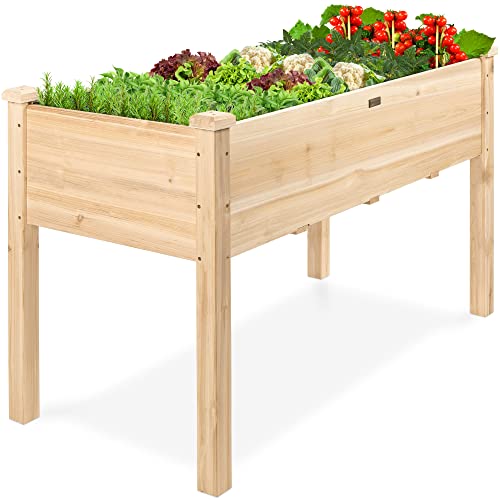
5. Best Choice Products 48 x 24 x 30 Inches Raised Garden Bed — Best premium
A 30 in tall fir wood planter that solves back strain rather than season extension, with a 200 lb stated capacity.
Best for: patio and balcony growing at standing height Skip it if: season extension is your main goal
Be clear on what this is. No cover ships with it. This is a 48 x 24 in wooden trough on legs, 30 in off the ground, 34 lb, model SKY2383, with a stated 200 lb load capacity and about 5 cu ft of bed space. It's here because a lot of people searching for the best greenhouse for raised beds are really trying to garden without kneeling, and this is the pick that does that.
Chinese fir wood is the material, which Best Choice Products describes as naturally water- and weather-resistant. A bed liner is included to separate wood from soil, which extends the life of the timber and discourages weeds. Drainage is designed in, so excess water leaves rather than sitting around roots. The 30 in height is sold on ergonomics, and at 5 cu ft of soil that's a workable herb and salad bed on a deck.
Now the honest loss. This is the most expensive pick here and it publishes no greenhouse capability at all. Pair it with the FuBegi hoops and the 24 in width matches their stated range, but you're buying twice. Wood also needs more attention than galvanized steel over five seasons, liner or not.
Pros:
- 30 in standing height, no kneeling
- Stated 200 lb capacity, about 5 cu ft of soil
- Bed liner included to protect the timber
- Designed drainage against waterlogging
- All-wood fir construction, weather-resistant
Cons:
- Highest price position and no cover included
- 5 cu ft is less soil than any full kit here
- Wood needs more upkeep than galvanized steel
- Only one seller lists it
6. Garden Elements Brown Elevated Raised Garden Bed — Best upgrade
A 45 L self-watering planter with a vented dome, and the only pick here that manages moisture for you.

Best for: herbs and seed starting on a deck or windowsill Skip it if: you want to grow full-size tomatoes
This is the small one, and the smart one. The tray measures 29.5 x 15 in with 10 in of soil depth, about 45 L or 40 quarts, standing 29.5 in tall on legs and weighing just 7 lb. The dome above it is 29.5 in wide, 14.5 in deep and 8 in high with adjustable vents. Polypropylene throughout, in brown.
What sets it apart from everything else here is the built-in reservoir. Garden Elements says an aerated base and water level indicator deliver consistent moisture, which is the difference between seedlings that make it through a hot week and seedlings that don't. Nothing else in this set manages water at all. At 7 lb it's the lightest pick by a wide margin, so moving it indoors when a frost is forecast is a one-hand job. Second-cheapest of the six, too.
The 8 in dome is the ceiling on ambition. Basil, lettuce, radish and seed trays fit. A tomato does not. Soil volume is a fraction of the 18 cu ft the Quictent bed holds, so this supplements a garden rather than being one. It's also the slowest seller of the six, and polypropylene won't take the abuse galvanized steel will.
Pros:
- Self-watering reservoir with level indicator
- 45 L capacity, 10 in soil depth
- Vented dome for pest and weather protection
- 7 lb, easiest here to move indoors
- Second-cheapest pick in this set
Cons:
- 8 in dome height rules out tall crops
- Smallest soil volume of the six
- Polypropylene rather than steel or wood
- Slowest seller here, with one listing seller
Bed kit or hoops: which suits your existing beds?
This is the fork in the road, and it comes down to one question: do you already own raised beds?
If you don't, buy a matched kit. The Miory and Quictent both give you a 6 x 3 x 1 ft galvanized bed with a cover engineered to sit on it, zippered windows and all. There's no measuring, no clip guesswork, no trip to buy plastic sheeting. That's worth the mid-range outlay for anyone starting from bare ground.
If you do own beds, hoops are almost always the better spend. The FuBegi set covers beds at both 3 ft and 4 ft widths with 36 rods and 24 clips, which is enough hardware for several beds at once. Your existing 12 in or 18 in bed walls already give you height that the rods add to. You choose the cover material by season.
Where it gets murky is the middle case: you own one bed and want more growing space too. Then a full kit adds soil area and cover at once, and the hoops still make sense as a second purchase for the bed you have.
What the listings do not tell you about assembly
None of these listings publishes a build time, and none states hardware count. That's normal, and here's what to expect anyway.
Galvanized bed panels bolt together at the corners with the middle support poles fitted before you fill with soil. Both the Miory and Quictent name those poles as the anti-bowing element, which means they're structural and not optional. Fit them first.
The Ohuhu greenhouse frame uses plastic connectors that push together, which is faster than bolts and easier to take apart. Its 51.2 x 94.5 x 47.2 in shipping footprint tells you something the marketing copy doesn't: this arrives as a large flat package, and you'll want a clear stretch of lawn to lay it out.
Three practical notes the specifications imply:
- Soil is the real work. The Quictent's 18 cu ft means twelve bags at 1.5 cu ft each, and you're carrying every one.
- Site before you build. A filled 8 x 4 ft bed does not move. The 29.8 lb frame weight is nothing next to wet soil.
- Keep the cover packaging. Both detachable frames are sold on off-season storage, and PE creases badly when bundled loose.
The elevated picks are different. The Best Choice Products planter at 34 lb and the 7 lb Garden Elements box both arrive as a body plus legs, and the Garden Elements reservoir needs filling and checking before you plant.
When a different pick wins
Six kits, six different buyers. These are the thresholds that flip my recommendation on the best greenhouse for raised beds.
- If your usable width is under 4 ft, the Ohuhu is out and the 3 ft Miory or Quictent wins by default.
- If you're growing indeterminate tomatoes or pole beans, only the Ohuhu's 51 in frame clears them. Everything else tops out around 35 in.
- If you already have beds, the FuBegi hoops at 17 in and 2.31 lb are the efficient buy, and the money you save goes on cover material.
- If bending is the problem you're solving, the 30 in Best Choice Products planter or the 29.5 in Garden Elements box beats every ground-level bed here.
- If you're growing on a deck or balcony, the 7 lb Garden Elements planter is the only pick light enough to reposition alone, and its reservoir handles watering.
- If you want the tallest cover on a 3 ft footprint, the Quictent's 35.4 in overall edges the Miory's 33.6 in.
The cutoff worth memorising: 24 in of interior height. Below it you're growing salad, herbs and seedlings. Above it you're growing fruit.
The verdict
At the entry end of this set, the FuBegi hoop kit is the sharpest value in the whole group. Thirty-six fiberglass rods at 17 in, 24 clips, 2.31 lb, a one-year warranty, and the only cost left is cover material you'd choose per season anyway. If you have beds, start here.
In the middle sit the two 6x3x1 ft galvanized kits, and this is where most gardeners should land. The Miory is my overall pick because it delivers bed and matched PE cover together with two reinforced middle poles, two zippered dual-layer windows, and labels and gloves in the box, one position cheaper than the near-identical Quictent. The Quictent's counter-argument is specific and worth hearing: 35.4 in overall against 33.6 in, a clear cover you can see through, and a published 18 cu ft soil figure that makes shopping for compost simple.
At the top, the Ohuhu is the pick that changes what you can grow. A claimed 51 in frame over an 8 x 4 ft bed is the only combination here that takes a staked tomato to harvest under cover, and the sloped roof sheds winter snow. You pay the most and you accept plastic frame connectors.
Buy the Miory unless your width is under 3 ft or your crops run over 3 ft.
FAQ
Is a raised bed greenhouse kit worth it over buying separately?
A raised bed greenhouse kit is worth it when you're starting from nothing, because the cover is dimensioned for the bed. The Miory ships a 6x3x1 ft box and a PE cover with two zippered windows as one purchase. If you already own beds, separate hoops like the FuBegi 36-piece set cost far less and cover several beds at once.
What is the cheapest way to cover raised beds I already own?
The cheapest way to cover raised beds you already own is a hoop-and-clip set. The FuBegi kit is the cheapest pick here: 36 fiberglass rods at 17 in, 24 clips, 2.31 lb, sized for 3 ft and 4 ft widths. No netting is included, so budget for insect mesh or frost cloth on top.
How tall does the cover need to be for tomatoes?
The cover needs to be roughly 24 in or more for determinate tomatoes, and above 40 in for staked indeterminate varieties. Only the Ohuhu clears that second bar, with a claimed greenhouse frame of 97 in x 50 in x 51 in. The Quictent at 35.4 in overall and the Miory at 33.6 in suit bush types and peppers instead.
Miory or Quictent: which 6x3 kit should I buy?
Between the Miory and Quictent, both give a 6 x 3 x 1 ft galvanized bed with two reinforced middle poles and two zippered screen windows. The Miory costs less and adds plant labels and gloves. The Quictent is 35.4 in overall against 33.6 in, uses a clear cover, and states 18 cu ft of soil capacity.
What mistake do first-time buyers make with these kits?
The most common mistake is buying on footprint and ignoring interior height. A 6 x 3 ft bed sounds generous until an 8 in dome or a 17 in hoop stops your crop at leaf stage. Check the height spec, subtract the bed wall, then match the remainder to what you actually plan to grow.
Measure your available width first, then your tallest intended crop, and the choice narrows to one or two picks in about a minute. For most small yards that's the Miory: a galvanized 6x3x1 ft bed and a matched PE cover, mid-range in this set, with the middle support poles that stop long beds bowing once wet soil goes in. It's the pick that gets you growing under cover this weekend without measuring a single rod. If you already have beds, order the FuBegi hoops instead and spend the difference on good compost.