Best Raised Garden Bed for Large Yards: BCP Wins

A large yard needs a raised bed strategy, not one bed. Here is how five kits stack up on capacity, depth and how many you can afford to run at once.

By Victoria ChapmanUpdated 14 min read
On this page
- Best raised garden bed for large yards at a glance
- How I screened the field down to five
- The deciding spec most buyers miss
- 1. Best Choice Products 72x24x30in Raised Garden Bed — Best overall
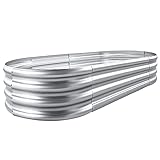
- 2. Land Guard Galvanized Raised Garden Bed Kit — Best budget pick
- 3. Best Choice Products 8x2ft Outdoor Wooden Raised Garden — Most versatile
- 4. SnugNiture 3 Pcs 4x2x1.5ft Raised Garden Bed Outdoor — Best upgrade
- 5. Tegarbed Galvanized Raised Garden Bed Outdoor — Best minimal setup
- How many beds does a large yard actually need?
- Wood or galvanized steel: which lasts longer outside?
- What the listings do not tell you
- The verdict
- FAQ
The best raised garden bed for large yards is the Best Choice Products 72x24x30in, a six-foot fir planter with 8.4 cubic feet of soil space, a 300 lb capacity and a 30-inch working height. Land Guard's galvanized 4x2x1ft kit is the smarter pick if you plan to line up several beds across a bigger footprint. Here is the deciding spec that shifts the answer: soil depth. Below 12 inches, root vegetables and full-size tomatoes struggle, no matter how much surface area you buy.
Best raised garden bed for large yards at a glance
| Pick | Footprint | Soil depth | Price |
|---|---|---|---|
| 72 x 24 in | 30 in stand elevated |
Check Price | |
Best budget pick Land Guard Galvanized Raised Garden Bed Kit |
48 x 24 in | 12 in | Check Price |
Most versatile Best Choice Products 8x2ft Outdoor Wooden Raised Garden |
96 x 24 in | 10 in | Check Price |
| 46 x 23.6 in 3-pack |
17 in | Check Price | |
Best minimal setup Tegarbed Galvanized Raised Garden Bed Outdoor |
48 x 24 in 2-pack |
12 in | Check Price |



How I screened the field down to five
Three disqualifications shaped this list. I cut planters shorter than 4 feet on the long side, because a large yard filled with 2-foot pots reads as a nursery, not a garden. I cut single-unit beds without a stated soil depth, so nothing here forces you to guess how far a root can travel. And I cut listings without a published weight or dimensions, because a big yard almost always means multiple beds, and layout planning falls apart without measurements.
What survived splits neatly. Two are galvanized steel multi-packs at 12 inches deep, aimed at buyers who want to cover ground. One is a taller galvanized three-pack at 17 inches. Two are fir wood beds from Best Choice Products: a six-foot elevated planter at a 30-inch working height, and an eight-foot ground-level bed at 10 inches with a divider panel.
Each survivor answers a different large-yard question. Do you want fewer, deeper beds for serious vegetables? Or several matching beds spaced across the lawn?
The deciding spec most buyers miss
Most raised garden bed guides for large yards compare footprint. That is not what decides it. Soil depth is.
A 96-inch bed at 10 inches deep gives you 20 cubic feet of soil. A 48-inch bed at 12 inches deep gives you 8. But the deeper bed grows carrots, parsnips, potatoes, full-size tomatoes and staked peppers without complaint. The shallow one, no matter how long, is a lettuce, herb and shallow-root bed. Below is the depth split across the five picks, from shallowest to deepest.
- 10 in: Best Choice Products 8x2ft wooden bed
- 12 in: Land Guard 4x2x1ft galvanized bed
- 12 in: Tegarbed 4x2x1ft galvanized 2-pack
- 17 in: SnugNiture 4x2x1.5ft galvanized 3-pack
- 30 in stand height, elevated planter with an 8.4 cu ft box: Best Choice Products 72x24x30in
That 30-inch figure on the winner is the stand height, not the soil column. Best Choice Products lists the growing volume at 8.4 cubic feet, which is closer to a deep planter than an in-ground raised bed. It is still the pick I would anchor a large yard with, because the ergonomics change what gardening feels like at scale. More on that in the pick section.
1. Best Choice Products 72x24x30in Raised Garden Bed — Best overall
A six-foot elevated fir planter with 8.4 cubic feet of soil, a 300 lb capacity and a working height that saves your back across a long yard tour.
Best for: gardeners who want one anchor bed at waist height with real soil volume Skip it if: you need to cover a lot of square footage on a tight budget
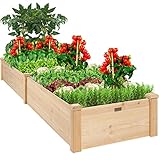
This is the only pick in the set that stands on legs, and in a large yard that matters more than the numbers suggest. A 72 x 24 in top with a 30-inch working height means you can weed, prune and harvest without kneeling, which changes how often you actually do it. The listing quotes 8.4 cubic feet of growing space, six drainage holes and a 300 lb soil-and-water capacity, plus a divider panel to run two crops in one box. Best Choice Products describes the frame as Chinese fir, chosen for weather resistance. It is the most expensive pick here and the second-heaviest of the six at 37.5 lb assembled.
The trade-off is footprint. One elevated planter will not fill a large yard. Pair it with a couple of ground-level beds from further down the list and let this one be the herbs-and-salad station near the back door.
Pros:
- 30-inch working height removes kneeling
- 8.4 cu ft of stated soil volume
- Divider panel for two crops in one box
- 300 lb capacity per the listing
- Six drainage holes designed in
Cons:
- The most expensive pick here for one bed
- Not deep enough for tall root crops in the main box
- Elevated planters dry out faster than in-ground beds
2. Land Guard Galvanized Raised Garden Bed Kit — Best budget pick
The cheapest of the five and the way to fill a large yard with matching beds without emptying the shed budget.
Best for: filling a big yard with several matching beds without overspending Skip it if: you want to grow deep-rooted vegetables in a single 12-inch bed
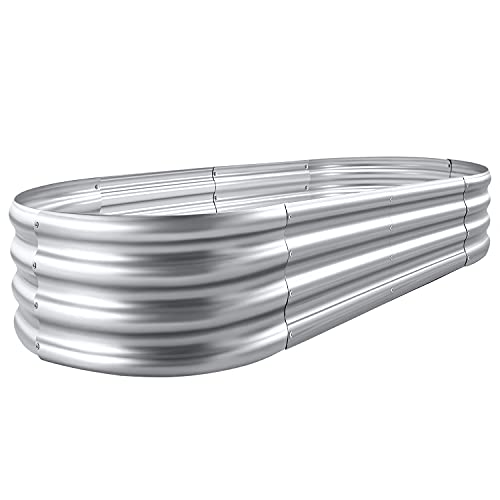
Land Guard's 4x2x1ft galvanized bed is the entry price in this set and the one buyers choose most often here by a wide margin. The listing calls out a Q195 galvanized steel sheet with a double-layer anti-corrosion treatment, an oval structure for stiffness, and an open base so water drains through to the soil below. Land Guard also claims an average sheet thickness of 0.78mm, reaching 1.56mm at the thickest points. Assembly is quoted at about five minutes.
The obvious question in a large yard is how many of these you buy. Two beds give you 14 cubic feet of growing space, three give you 21. That scales more cheaply than a single premium planter, and the matching finish stops your yard looking like a leftovers pile. The catch is depth: 12 inches is fine for leafy greens, bush beans, strawberries and shorter peppers, but full-size tomatoes and long roots need more.
Pros:
- Lowest price position in the set
- Sells faster than the rest of this set
- Open base drains straight to native soil
- Double-galvanized steel per the listing
- Roughly five-minute stated assembly
Cons:
- 12-inch depth limits deep-rooted crops
- Only one bed per box, so a large yard needs several
- Lightweight 5 lb frame can shift before soil goes in
3. Best Choice Products 8x2ft Outdoor Wooden Raised Garden — Most versatile
Eight feet of ground-level fir with a divider, ideal for a long run along a fence line.

Best for: long runs along a fence or path with a divider for mixed planting Skip it if: you plan to grow carrots, parsnips or full-size tomatoes
This 96 x 24 x 10 in wooden bed is the longest single unit in the set. Best Choice Products describes dovetail joints locking into screw-fastened posts, a Chinese fir construction, and an included liner between wood and soil. The included middle divider splits the 8-foot run into two zones, which is genuinely useful for keeping mint away from basil or separating a lettuce succession from a strawberry patch.
Two things to know. First, depth is 10 inches, the shallowest here. That rules out carrots, parsnips and staked tomatoes as reliable crops. Second, at 20 lb the bed is light before soil, so it wants a level pitch on grass or paving. In a large yard, it earns its keep as the along-the-fence bed you plant with rows of shallow crops. Buy two and you have a 16-foot production line for the price of one premium planter.
Pros:
- Longest single footprint at 96 in
- Included divider splits it into two zones
- Fir wood with a liner between wood and soil
- Dovetail joints and screw-fastened posts
Cons:
- 10-inch depth is the shallowest here
- Slowest seller of the five in this set
- Not suited to root vegetables or heavy tomatoes
4. SnugNiture 3 Pcs 4x2x1.5ft Raised Garden Bed Outdoor — Best upgrade
Three matching 17-inch-deep galvanized beds in one box, the coordinated multi-bed layout for a large yard.

Best for: buyers who want a coordinated three-bed layout with a 17-inch soil depth Skip it if: you prefer the reach of a longer 4 or 6-foot bed
SnugNiture is the deepest metal option here and the only pack of three in the set. Each bed measures 46 x 23.6 x 17 in, which puts soil depth halfway between the 12-inch entry beds and a proper in-ground raised bed. The listing describes a thickened oval structure, safety rubber edging around the top rim, and an open bottom for drainage into native soil. The rubber edging matters more than it sounds: galvanized sheet has a cut edge, and reaching in to weed a bed dozens of times a season is where you notice a rolled or shielded rim.
Buying three at once is the whole point. In one purchase you get 32 to 33 cubic feet of soil space across three matching beds you can arrange in a row, an L or a U. The compromise is length. At 46 in, no single bed is as long as the wooden picks, so you get more beds rather than more reach per bed.
Pros:
- 17-inch soil depth, deepest of the metal options
- Three matching beds in one box
- Safety rubber edging on the top rim
- Oval structure resists deformation per the listing
- Open bottom drains to native soil
Cons:
- Premium price position for a metal kit
- Shorter than the 4 and 6-foot single beds
- No published assembled weight
- Fewer specifications listed than the others here
5. Tegarbed Galvanized Raised Garden Bed Outdoor — Best minimal setup
Two 4x2x1ft galvanized beds with a tool-free, roughly 20-minute assembly.

Best for: a fast weekend install of two matching beds with no tools Skip it if: you want a single large footprint rather than a pair of small ones
Tegarbed is the second-cheapest here and the fastest to stand up. The listing quotes an average 1mm galvanized steel with reinforced corrugated panels, a bottomless design, and roughly 20 minutes of tool-free assembly per bed. You get two 48 x 24 x 12 in beds in the box, together weighing 17.2 lb, so lifting and positioning them is a one-person job before the soil arrives.
In a large yard this is the pick to pair with the elevated Best Choice Products planter. You put the tall planter near the door for herbs and salads, and set the two Tegarbed beds further out for the crops that need more square footage. The 12-inch depth is the same limitation the other galvanized entry pick has, so plan the planting list around leafy greens, bush crops and short roots. Several sellers stock this one, which helps if the first listing runs short.
Pros:
- Second-cheapest position in this set
- Two beds per purchase
- Tool-free stated assembly of about 20 minutes
- 1mm galvanized steel per the listing
- Reinforced corrugated panels
Cons:
- 12-inch depth caps the crop list
- 48-inch length is short for a long run
- Silver finish shows scuffs sooner than painted steel
How many beds does a large yard actually need?
There is no single answer, but there is a working rule. Start with the smallest area you will realistically weed every weekend, and multiply from there.
- Count the crops you actually want to grow. Not the ones you imagine growing. The ones you will eat.
- Assign each crop a bed or a bed section. Tomatoes get their own bed. Lettuces, herbs and greens share.
- Add one bed for succession planting so nothing sits empty in July.
- Add one bed for the crop you always wish you had planted more of.
For most large yards that lands between three and five beds. The multi-packs in this list make hitting that number in one order much easier. A three-pack from SnugNiture plus the elevated Best Choice Products planter is a four-bed setup out of two boxes. Two Tegarbed beds plus the 8-foot Best Choice Products wooden bed with a divider is a five-zone setup. You are buying a garden, not a bed.
Wood or galvanized steel: which lasts longer outside?
Both survive weather, and both have failure modes. Fir wood, which both Best Choice Products picks specify, is naturally rot-resistant but not immune. The 8-foot wooden bed includes a liner between soil and wood, which slows the wet-contact rot that finishes cheaper pine planters in three to four seasons. The elevated planter keeps its wood off the ground entirely, which is a bigger advantage than the material choice.
Galvanized steel does not rot, but the cut edges and the coating are the wear points. All three metal picks here specify double or heavier galvanization. Land Guard quotes an average 0.78mm sheet with a 1.56mm thickest point. Tegarbed quotes an average 1mm sheet with reinforced corrugated panels. SnugNiture adds safety rubber edging along the rim.
Practically, wood looks softer in a large yard and blends into an ornamental garden. Steel looks tidier in a working vegetable plot and scales more cheaply when you need four or five beds. Match the material to the room, not the spec sheet.
What the listings do not tell you
Three things the product pages skip that decide how a large yard actually plays out.
- Soil volume adds up fast. A 4x2x1ft bed holds around 8 cubic feet. Three of them is 24 cubic feet, or close to a full pickup bed of soil. Budget the fill, not just the frame.
- Level ground is not optional. Metal beds with open bases telegraph every dip in the lawn. A 6-foot bed on uneven ground will show a gap under one corner, and that gap will leak soil after every heavy rain.
- Watering scales badly. Five separate beds means five separate hose runs or a drip system. In a large yard, plan the water before you plan the layout.
None of the listings warn you about any of that, which is fair enough. It is not a product problem. It is a planning problem, and it is the difference between a large yard that produces food and one that produces regret.
The verdict
If you want one bed to anchor a large yard, buy the Best Choice Products 72x24x30in. The 30-inch working height, 8.4 cubic feet of stated soil volume and 300 lb capacity make it the most usable single planter in this set, and the divider gives you two crops in one box. Put it near the door and plant it with the salad and herbs you cut daily.
If you want to cover ground, buy the SnugNiture three-pack. Three coordinated 46 x 23.6 x 17 in beds in one order fill a corner of a large yard properly, and the 17-inch depth grows a wider crop list than the 12-inch entry beds. The cutoff is depth: below 12 inches you are running a salad garden, and above 15 inches you are running a real vegetable plot.
The Land Guard and Tegarbed beds are the right add-ons rather than the main event. Buy two or three of either to extend your footprint after the anchor bed is in place. The 8-foot Best Choice Products wooden bed is the fence-line specialist for shallow crops.
FAQ
How many raised beds does a large yard really need?
How many raised beds you really need depends on the crops on your list, not the size of the yard. Three to five is a workable range for most households: one anchor bed for herbs and salad near the door, two production beds for tomatoes, peppers and beans, and one or two shallow beds for greens and successions. The multi-packs in this list get you there in one order.
Is the elevated Best Choice Products planter worth the price?
Is the elevated Best Choice Products planter worth the price? For a large yard, yes, as the anchor bed. The 30-inch working height is the feature you will actually notice every time you weed, and the 8.4 cubic feet of soil and 300 lb capacity are enough for a real planting, not a token box. It is the most expensive pick here, so pair it with cheaper metal beds for the rest of the layout.
What soil depth do I need for tomatoes and root vegetables?
What soil depth you need depends on the crop. Twelve inches, the depth of the Land Guard and Tegarbed beds, handles lettuce, bush beans, peppers, strawberries and short carrots. Fifteen to eighteen inches, closer to the SnugNiture kit's 17-inch profile, is where full-size tomatoes, parsnips and long carrots grow properly. Below 10 inches you are limited to salad greens and herbs.
Land Guard or Tegarbed: which galvanized bed for a large yard?
Land Guard or Tegarbed comes down to how you want to buy them. Land Guard ships as a single 4x2x1ft bed and sells faster than the rest of this set, so buying three or four separately is the way to scale. Tegarbed ships as a 2-pack in one box with a tool-free assembly and a slightly heavier stated sheet thickness. Choose Land Guard for flexibility, Tegarbed for a fast pair.
What is the biggest raised bed mistake in a large yard?
The biggest raised bed mistake in a large yard is buying one huge bed and calling it done. A large yard needs a layout, not a monument. Three medium beds beat one giant bed every time: you rotate crops more easily, reach the middle without stepping in, and lose less of the garden when one crop fails. Plan the paths between the beds before you buy the beds.
The fastest way to get a large yard producing food this season is to order the anchor bed and the coordinated multi-pack together, so the frames arrive in the same week and you fill them with one soil delivery. The Best Choice Products 72x24x30in gives you the daily-use planter at a working height, and the SnugNiture three-pack gives you three deeper beds you can arrange as a row, an L or a U further out. Everything else on this list slots in around that pair as you expand. Measure the space, sketch the paths, then buy the beds.